Medicare and Medicaid EHR Incentive Program

Medicare and Medicaid EHR Incentive Programs

The Centers for Medicare & Medicaid Services (CMS) has launched the official website for the Medicare & Medicaid EHR Incentive Programs. This website provides the most up-to-date, detailed information about the EHR incentive programs.

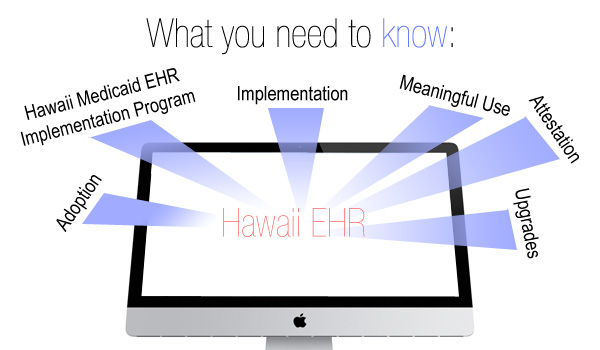
The Medicare and Medicaid EHR Incentive Programs will provide incentive payments to eligible professionals and hospitals as they adopt, implement, upgrade, or demonstrate meaningful use of certified EHR technology.

Bookmark this site and visit http://www.cms.gov/EHRIncentivePrograms/ often to learn about who is eligible for the programs, how to register, meaningful use, upcoming EHR training and events, and much more!

Downloads
Fact Sheet: Medicare and Medicaid EHR Incentive Programs: Title IV of Recovery Act

Press Release: CMS and ONC Issue Regulations Proposing a Definition of “Meaningful Use” and Setting Standards for EHR Incentive Program

Copy of Published Proposed Rule for EHR Incentive Programs and Definition of Meaningful Use [7.37 MB]

Fact Sheet: Proposed Requirements for Medicaid EHR Incentive Program

Fact Sheet: Proposed Requirements for Medicare EHR Incentive Program

Fact Sheet: Proposed Definition of Meaningful Use

Related Links Inside CMS
Health IT Frequently Asked Questions

Share Hawaii EHR:
  • Twitter
  • LinkedIn
  • Facebook
  • Yahoo! Bookmarks
  • Digg
  • del.icio.us
  • Mixx
  • Google Bookmarks
  • MySpace
  • Furl
  • Spurl
  • Technorati
  • YahooMyWeb
  • email
  • LinkaGoGo
  • StumbleUpon
 

Hawaii Premium Plus (HPP) HMOs and Health Insurance

Kaiser and HMAA Post Losses and State Offers Hawaii Premium Plus (HPP)

Pacific Business News reported that Kaiser Permanente Hawaii reported a $700,000 loss for the first quarter of 2010 compared with a $300,000 loss during the same period last year. PBN also reported that Hawaii Medical Assurance Association showed a $305,474 loss in the first quarter — which it attributes to fees and other expenses related to its acquisition of Summerlin Life and Health Insurance Hawaii. That acquisition makes it the third largest insurer in Hawaii.

Hawaii to Start Seeing Effects of Health Act

The Honolulu Advertiser reported that on June 1, HMSA will open its rolls to the young adults, allowing people who would ordinarily lose their health coverage because of age, school graduation or school status change to keep health care insurance through their parents’ policies. They won’t be eligible for the coverage if they have insurance from an employer group.

That potentially could affect health care coverage for thousands of people, said Fred Fortin, HMSA senior vice president. That’s only one of a mind-numbing number of changes within the bill. Also in June, there will be relief for 34,300 Medicare beneficiaries who fall into the so-called doughnut hole or gap in Medicare Part D coverage. These people will automatically receive a one-time payment of $250, with the first group of rebate checks being mailed on June 15, according to AARP.

The Patient Protection and Affordable Care Act was signed into law on March 24, 2010. The Senate bill has 10 major sections and is some 2,400 pages long. Major provisions can be found here.

Hawaii Premium Plus (HPP) Started May 1

Hawaii Premium Plus (HPP) is a new, temporary program designed to stimulate the economy, decrease unemployment, create jobs and prevent individuals from needing medical or other public assistance. HPP provides a health insurance premium reimbursement to employers who increase staffing between May 1, 2010, and April 30, 2011. Some of the FAQs:

Applications must be received within two months of hiring new employees. HPP requires employers to sign an Application to Enroll Employer and Employer Participation Agreement (HPP 8000-T) and a W-9, and complete an Application to Enroll Employee (HPP 8000-U) for each new hire for whom they request reimbursement. These forms and additional information about HPP are available online at www.PremiumPlus.hawaii.gov.

Can a prospective employee be covered by more than one health plan, i.e., through the employer’s sponsored health coverage and their spouse’s?
Yes.

Are any documents required?
Yes, just the employer’s W-9 form.

Does the newly hired employee need to provide documents such as pay statements?
No.

Does the employee have to be a U.S. citizen?
No.

When does participation in Hawaii Premium Plus start?
Employers will be eligible for reimbursement as of the first day of the month in which a full month’s health coverage is provided for a newly hired employee.

Are there other on-going requirements?
Eligible employers are required to complete and submit a Quarterly Report (HPP 8000-V) within 15 days of the end of the quarter.

Share Hawaii EHR:
  • Twitter
  • LinkedIn
  • Facebook
  • Yahoo! Bookmarks
  • Digg
  • del.icio.us
  • Mixx
  • Google Bookmarks
  • MySpace
  • Furl
  • Spurl
  • Technorati
  • YahooMyWeb
  • email
  • LinkaGoGo
  • StumbleUpon
 

ONC HITECH and NHIN

There Is No ‘One-Size-Fits-All’ in Building a Nationwide Health Information Network

A Message from Dr. David Blumenthal, National Coordinator for Health Information Technology

Private and secure health information exchange enables information to follow the patient when and where it is needed for better care. The Federal government is working to enable a wide range of innovative and complementary approaches that will allow secure and meaningful exchange within and across states, but all of our efforts must be grounded in a common foundation of standards, technical specifications, and policies. Our efforts must also encourage trust among participants and provide assurance to consumers about the security and privacy of their information. This foundation is the essence of the Nationwide Health Information Network (NHIN).

The NHIN is not a network per se, but rather a set of standards, services, and policies that enable the Internet to be used for the secure exchange of health information to improve health and health care. Different providers and consumers may use the Internet in different ways and at different levels of sophistication. To make meaningful use possible, including the necessary exchange of information, we need to meet providers where they are, and offer approaches that are both feasible for them and support the meaningful use requirements of the Centers for Medicare & Medicaid Services (CMS) Electronic Health Record Incentives Programs. As with the Internet, it is likely that what is today considered “highly sophisticated” will become common usage. Moreover, users may engage in simpler exchange for some purposes and more complex exchange for others.

Current NHIN exchange capabilities are the result of a broad and sustained collaboration among Federal agencies, large provider organizations, and a variety of state and regional health information organizations that all recognized a need for a high level of interoperable health information exchange that avoided “one-off” approaches. Based on this pioneering work, a subset of these organizations is now actively exchanging information. This smaller group currently includes the Department of Defense, Social Security Administration, Veterans Health Administration, Kaiser Permanente, and MedVirginia. They initially came together to show, on a pilot scale, that this type of highly evolved exchange was possible. Having succeeded, they continue to expand the level of exchange among their group and with their own respective partners in a carefully phased way to demonstrate and learn from these widening patterns of exchange. The robust exchange occurring at this level has several key attributes, including the:

1. Ability to find and access patient information among multiple providers;
2. Support for the exchange of information using common standards; and
3. Documented understanding of participants, enabling trust, such as the Data Use and Reciprocal Support Agreement (DURSA).

Not every organization and provider, however, needs or is ready for this kind of health information exchange today. Nor do the 2011 meaningful use requirements set forth by CMS in the recent proposed rule require it. Direct, securely routed information exchange may meet the current needs of some providers for their patients and their practices, such as receiving lab results or sending an electronic prescription.

To enable a wide variety of providers – from small practices to large hospitals – to become meaningful users of electronic health records in 2011, we need to ensure the availability of a reliable and secure “entry level” exchange option that aligns with the long-range information exchange vision we have for our nation. Such an option should balance the need for a consistent level of interoperability and security across the exchange spectrum with the reality that not all users are at the same point on the path to comprehensive interoperability. In an effort to provide the best customer service possible, the Office of the National Coordinator for Health IT (ONC) will consider what a complete toolkit would be for all providers who want to accomplish meaningful health information exchange.

Broadening the use of the NHIN to include a wider variety of providers and consumers who may have simpler needs for information exchange, or perhaps less technically sophisticated capabilities, is critical to bolstering health information exchange and meeting our initial meaningful use requirements. Building on the solid foundation established through the current exchange group mentioned above and the recommendations of the HIT Policy Committee (which originated with the Committee’s NHIN Workgroup), ONC is exploring this expansion of NHIN capabilities to find solutions that will work across different technologies and exchange models.

The newly launched NHIN Direct Project Exit Disclaimer is designed to identify the standards and services needed to create a means for direct electronic communication between providers, in support of the 2011 meaningful use requirements. It is meant to enhance, not replace, the capabilities offered by other means of exchange. An example of this type of exchange would be a primary care physician sending a referral and patient care summary to a specialist electronically.

We are on an aggressive timeline to define these specifications and standards and to test them within real-world settings by the end of 2010. Timing is critical so that we may provide this resource to a broader array of participants in health information exchange as a wave of new, meaningful users prepare to qualify for incentives provided for in the HITECH Act and ultimately defined by CMS. This model for exchange will meet current provider needs within the broader health care community, complement existing NHIN exchange capabilities, and strengthen our efforts toward comprehensive interoperability across the nation.

A natural evolution in NHIN capabilities to support a variety of health information exchange needs is being reinforced by trends that are leading us toward widespread multi-point interoperability. The current movement toward consolidation in health care, coupled with health reform’s encouragement of bundled payments for coordinated care, will mean more providers need it. Quality improvement, public health, research, and a learning health care system all require it. Ultimately, simple exchange will be part of a package of broader functions that allows any provider, and ultimately consumers, to exchange information over the Internet, enabled by NHIN standards, services, and policies.

Your continued input will help guide us toward and maintain a direction that is in harmony with the rapid innovations in health IT today. The NHIN Direct Project will conduct an open, transparent, and collaborative process throughout its development by using a community wiki, blogs, and open source implementation already available on the project’s website (http://nhindirect.org Exit Disclaimer). I encourage you to participate through the website, via public participation at the implementation group meetings, and by deploying and testing the resulting standards and specifications. For those of you who are participants in the current exchange group, I urge you to take every opportunity to share your experiences. Lessons learned from the NHIN Direct Project and the exchange group will inform the evolution of the NHIN as new uses and users come forward, and as continued innovation occurs to meet the growing needs of our community.

As we head into the next stage in the development of nationwide health information exchange, we should all take a moment to reflect on how far we have come and evaluate our plans for the future. ONC is committed to providing resources and guidance to stakeholders at all levels of exchange through HITECH programs, such as the Health IT Regional Extension Centers, the national Health IT Research Center, and the State Health Information Exchange Program. As you assess your own needs for exchange, please take advantage of the many Federal resources available to you on the ONC website and the online resources of the programs mentioned above, as well as through the “NHIN University Exit Disclaimer” education program hosted by our public-private partner, the National eHealth Collaborative Exit Disclaimer.

We have done a great deal of work in the short period of time since the passage of the HITECH Act. We at ONC appreciate your willingness to stay engaged and involved in every step of our journey, and we look forward to our continuing collaboration to improve the health and well-being of our nation.

Sincerely,

David Blumenthal, M.D., M.P.P.
National Coordinator for Health Information Technology
U.S. Department of Health & Human Services

The Office of the National Coordinator for Health Information Technology (ONC) encourages you to share this information as we work together to enhance the quality, safety and value of care and the health of all Americans through the use of electronic health records and health information technology.

For more information and to receive regular updates from the Office of the National Coordinator for Health Information Technology, please subscribe to our Health IT News list.

Share Hawaii EHR:
  • Twitter
  • LinkedIn
  • Facebook
  • Yahoo! Bookmarks
  • Digg
  • del.icio.us
  • Mixx
  • Google Bookmarks
  • MySpace
  • Furl
  • Spurl
  • Technorati
  • YahooMyWeb
  • email
  • LinkaGoGo
  • StumbleUpon
 

Security Breaches Affecting 500 or More Individuals

Security Breaches Affecting 500 or More Individuals Online

Here is a list of Breaches Affecting 500 or More Individuals

Under HHS rules, if a breach affects 500 or more individuals, a covered entity must provide the Secretary with notice of the breach without unreasonable delay and in no case later than 60 days from discovery of the breach.  This notice must be submitted electronically by following the link below and completing all information required on the breach notification form.

If a covered entity that has submitted a breach notification form to the Secretary discovers additional information to report, the covered entity may submit an additional form, checking the appropriate box to signal that it is an updated submission.

Submit Notice of a Breach Affecting 500 or More Individuals

Breaches Affecting Fewer than 500 Individuals

For breaches that affect fewer than 500 individuals, a covered entity must provide the Secretary with notice annually.  All notifications of breaches occurring in a calendar year must be submitted within 60 days of the end of the calendar year in which the breaches occurred.  Notifications of all breaches occurring after the effective date in 2009 must be submitted by March 1, 2010.  This notice must be submitted electronically by following the link below and completing all information required on the breach notification form.  A separate form must be completed for every breach that has occurred during the calendar year.

If a covered entity that has submitted a breach notification form to the Secretary discovers additional information to report, the covered entity may submit an additional form, checking the appropriate box to signal that it is an updated submission.

Submit Notice of a Breach Affecting Fewer than 500 Individuals

Big Whale Breaches

Big Whale Breaches

Big Mens-Breeches or Britches?

Breeches or Britches?

Share Hawaii EHR:
  • Twitter
  • LinkedIn
  • Facebook
  • Yahoo! Bookmarks
  • Digg
  • del.icio.us
  • Mixx
  • Google Bookmarks
  • MySpace
  • Furl
  • Spurl
  • Technorati
  • YahooMyWeb
  • email
  • LinkaGoGo
  • StumbleUpon
 

Medicare Physician Reimbursement and Unemployment Payments Reinstated

Medicare Beneficiaries’ and Unemployment Payments Reinstated

Medicare beneficiaries were facing payment cuts of 21.2% due to the changes in the Medicare physician fee schedule. The bill reinstated them to the level they were at on March 31, and postponed the 2010 cuts . The President’s signed it yesterday.

H.R. 4851 also includes language that would modify the Health Information Technology for Economic and Clinical Health (HITECH) Act to allow physicians who provide a majority of their Medicare-covered professional services in the hospital outpatient setting to be eligible for Medicare electronic health record (EHR) incentive payments. In its December EHR meaningful use proposed rule, CMS, proposed that physicians who furnish at least 90 percent of their services in a hospital setting, either inpatient or outpatient, would not be eligible for the EHR Medicare incentive payment. ASGE supports the modification to the HITECH Act as included in H.R. 4851

As of April 5, 2010, unemployed people who had exhausted their states’ jobless benefits were unable to receive additional benefits under the federal program.  On Thursday, April 15, 2010, President Obama signed H.R. 4851, the Continuing Extension Act of 2010, legislation to provide up to 99 weekly unemployment checks averaging $335 to people whose 26 weeks of state-paid benefits have run out. When unemployment benefits do run out, it artificially boosts the employment rate (or lowers the unemployment rate), since these workers do not appear in any statistics.

Some of the major provisions include:

Continuing Extension Act of 2010 – (Sec. 2) Amends the Supplemental Appropriations Act, 2008 with respect to the state-established individual emergency unemployment compensation account (EUCA). Extends the final date for entering a federal-state agreement under the Emergency Unemployment Compensation (EUC) program through May 5, 2010. Postpones the termination of the program until October 2, 2010.

Amends the Assistance for Unemployed Workers and Struggling Families Act to extend until May 5, 2010: (1) federal-state agreements increasing regular unemployment compensation payments to individuals; and (2) requirements that federal payments to states cover 100% of EUC.

Amends the Unemployment Compensation Extension Act of 2008 to exempt weeks of unemployment between enactment of this Act and October 2, 2010, from the prohibition in the Federal-State Extended Unemployment Compensation Act of 1970 against federal matching payments to a state for the first week in an individual’s eligibility period for which extended compensation or sharable regular compensation is paid if the state law provides for payment of regular compensation to an individual for his or her first week of otherwise compensable unemployment. (Thus allows temporary federal matching for the first week of extended benefits for states with no waiting period.)

(Sec. 3) Amends the American Recovery and Reinvestment Act of 2009 to extend through April 30, 2010, premium assistance for COBRA benefits (health insurance continuation benefits under the Consolidated Omnibus Budget Reconciliation Act of 1985).

(Sec. 4) Amends title XVIII (Medicare) of the Social Security Act (SSA) to extend through April 30, 2010: (1) the 0% update to the conversion factor in the Medicare physician payment computation; and (2) the Medicare physical therapy services caps exceptions process.

(Sec. 6) Amends SSA title VIII (Medicare) and title XIX (Medicaid) with respect to the prohibition against incentive payments to hospital-based eligible professionals for use of certified electronic health record (EHR) technology. Redefines “hospital-based eligible professional” to repeal its application to outpatient settings, thereby permitting incentive payments to an eligible professional who furnishes services in an outpatient clinic.

Share Hawaii EHR:
  • Twitter
  • LinkedIn
  • Facebook
  • Yahoo! Bookmarks
  • Digg
  • del.icio.us
  • Mixx
  • Google Bookmarks
  • MySpace
  • Furl
  • Spurl
  • Technorati
  • YahooMyWeb
  • email
  • LinkaGoGo
  • StumbleUpon
 

Hawaii EHR Implementations Move Toward Meaningful Use

EHR Implementations Move Toward Meaningful Use

Meaningful Use is correctly encouraging what? Does anyone know what this term means? The bottom line or end result is that physicians will need to adopt and use EHR technology which is built to the standards defined by ONC (Office of the National Coordinator for Health Information Technology) or HHS (U.S. Department of Health and Human Services).

ONC’s mission includes:

  • Promoting development of a nationwide HIT infrastructure that allows for electronic use and exchange of information  
  • Providing leadership in the development, recognition, and implementation of standards and the certification of HIT products;
  • Health IT policy coordination;
  • Strategic planning for HIT adoption and health information exchange; and
  • Establishing governance for the Nationwide Health Information Network.

Bottom line – it’s time to set up shop before it’s too late. Many, many physicians are confused, bewildered, undecided, uninformed, overwhelmed, indifferent or fed up. As their payments get cut, they get disenfranchised and decide that they don’t want to participate in this whole grand scheme. That is understandable, it is overwhelming. It takes months just to learn the acronyms.

End goal - comply with meaningful use of electronic health record system (EHR) as established in the American Recovery and Reinvestment Act of 2009 (ARRA). If you have questions, now is the time to ask. The train is starting to move. Many organizations are starting to have seminars, may of them online. For example, the AAN offers a seminar where “Participants will learn about the federal incentives available for the purchase/use of an EHR system, what requirements a physician must meet to get the incentives, and how they will be paid. Find out how the phrase ‘meaningful use’ determines a qualifying product and about the consequences for physicians who do not purchase an EHR.”

Share Hawaii EHR:
  • Twitter
  • LinkedIn
  • Facebook
  • Yahoo! Bookmarks
  • Digg
  • del.icio.us
  • Mixx
  • Google Bookmarks
  • MySpace
  • Furl
  • Spurl
  • Technorati
  • YahooMyWeb
  • email
  • LinkaGoGo
  • StumbleUpon
 

Obama to Give $600 Million to Community Health Centers

Obama to give $600 million to health centers

President Barack Obama said Wednesday he will allocate nearly $600 million from the $787 billion economic stimulus plan to help create jobs at 85 community health centers.

Obama is under heavy pressure to generate job growth in the United States, with the November unemployment rate at 10 percent.

Republicans say the economic stimulus package passed in February by the Democratic-controlled Congress has had little impact, but Democrats counter that the stimulus pulled the country back from the brink of an even deeper recession.

The White House said nearly $600 million would awarded to help pay for major construction and renovation projects at 85 community health centers across the country and assist networks at the centers to move to electronic records.

The funds are expected not only to create new jobs in construction and healthcare, but also to help provide care for more than 500,000 additional patients in underserved communities, the White House said.

Obama pressed his case for bipartisan support for healthcare reform, saying the U.S. healthcare system takes a toll not just in high costs and lost workdays, but on Americans who suffer because they are unable to afford care.

“No matter what party we belong to, or where on the political spectrum we fall, none of us thinks this is acceptable. None of us would defend this system. That’s why we’ve taken up the cause of health insurance reform this year,” Obama said.

Obama also announced a new demonstration initiative to support the delivery of advanced primary care to elderly and disabled Medicare patients through community health centers.

“Taken together, these three initiatives — funding for construction, technology and a medical home demonstration — they won’t just save money over the long term and create more jobs,” Obama said in remarks just before signing the memo authorizing the demonstration project.

“They’re also going to give more people the peace of mind of knowing that healthcare will be there for them and their families when they need it and ultimately that’s what health insurance reform is really about,” he said. “That’s what the members of Congress here today will be voting on in the coming weeks.”

To qualify for funding, a facility must be a federally qualified “community” health center.

(Reporting by Steve Holland and Patricia Zengerle, editing by Mohammad Zargham)

Map of CHCs

Map of CHCs

Share Hawaii EHR:
  • Twitter
  • LinkedIn
  • Facebook
  • Yahoo! Bookmarks
  • Digg
  • del.icio.us
  • Mixx
  • Google Bookmarks
  • MySpace
  • Furl
  • Spurl
  • Technorati
  • YahooMyWeb
  • email
  • LinkaGoGo
  • StumbleUpon
 
Technology Blogs - BlogCatalog Blog Directory